How Strong Is Canada’s Military in 2026?
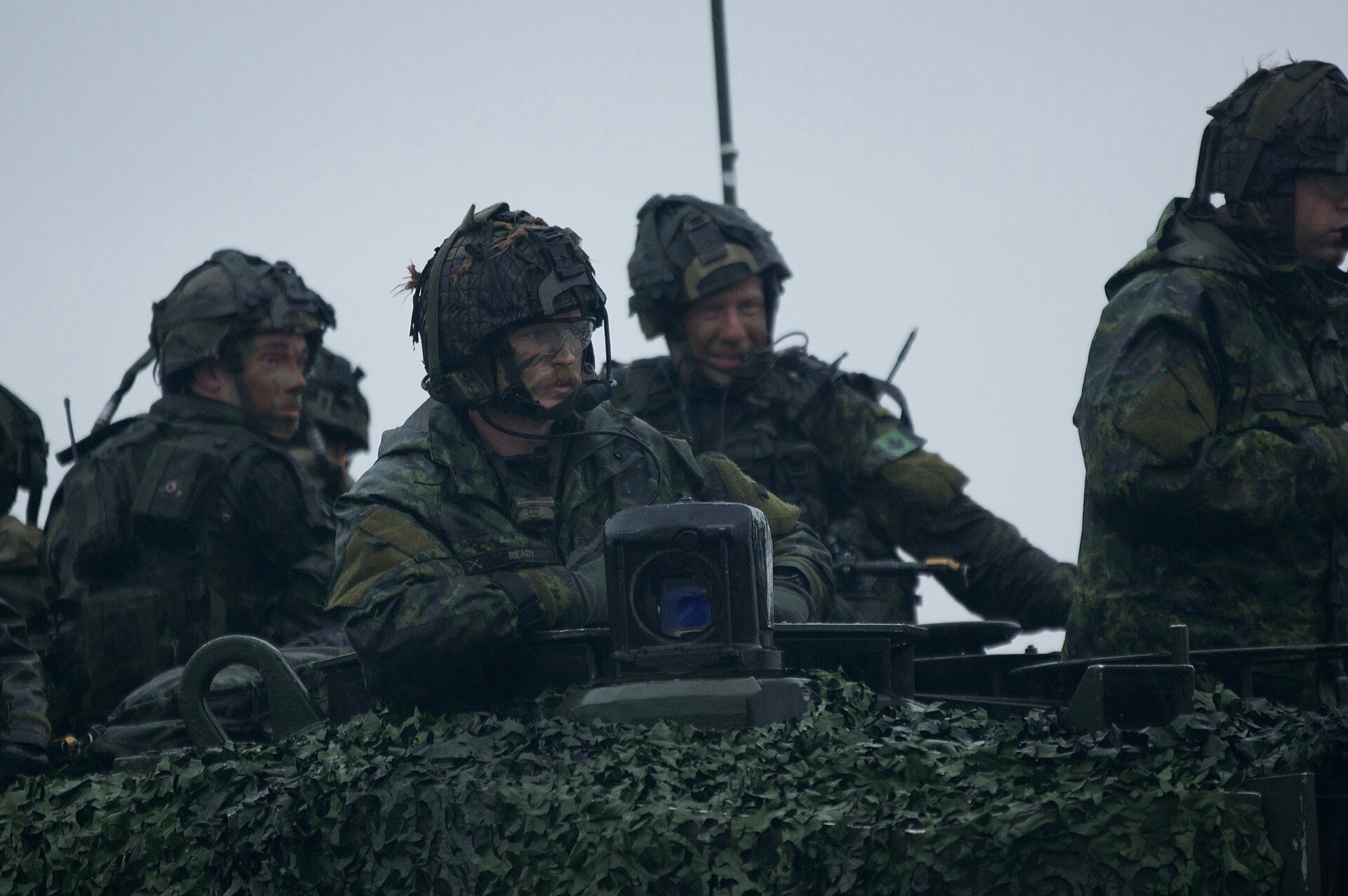
Canada has the second-largest territory in the world, three ocean coastlines and a long Arctic frontier, yet for years it was one of NATO’s lowest spenders. That is finally changing. Under pressure from Washington and alarmed by Russia and China’s activity in the Arctic, Ottawa has launched its biggest rearmament in decades. Here is how strong Canada’s armed forces are in 2026.
- Global Firepower 2026 rank: 28th
- Reached NATO’s 2% of GDP target for the first time in years
- About 65,000 regular and 30,000 reserve personnel
- Chose Germany’s TKMS for up to 12 new submarines
- Leads NATO’s multinational brigade in Latvia
Budget and ranking
In 2025 the government announced billions of dollars in extra funding to reach NATO’s 2 percent of GDP target, a goal Canada had missed for decades, and it has endorsed the alliance’s new 5 percent commitment for 2035. Global Firepower ranks Canada 28th in the world in 2026. A new Defence Investment Agency is meant to speed up procurement, which has long been slow and expensive.
Manpower
The Canadian Armed Forces have around 65,000 regular members and about 30,000 reservists. Recruitment and retention have been serious problems, leaving many units below strength, and fixing them is one of the top priorities of the rearmament plan.
Air force: F-35s and the Arctic
The Royal Canadian Air Force still flies ageing CF-18 Hornets while it waits for the F-35A; Canada signed for 88 jets, though Ottawa reviewed in 2025 whether to buy all of them. P-8A Poseidon patrol aircraft and MQ-9B drones are on order, and Canada is investing heavily in NORAD modernisation, including new over-the-horizon radars to watch the Arctic approaches.
Navy: destroyers and submarines
The Royal Canadian Navy is replacing its Halifax-class frigates with up to 15 River-class destroyers based on the British Type 26 design. Canada has chosen Germany’s TKMS to build up to 12 new conventional submarines to replace the four ageing Victoria-class boats, a decision driven largely by the need to operate under Arctic ice. New Arctic and Offshore Patrol Ships already patrol the far north.
Army and NATO commitments
The army operates Leopard 2 tanks and LAV 6 armoured vehicles and is buying new ground-based air defence, long-range rocket artillery and anti-tank weapons. Its most important commitment abroad is in Latvia, where Canada leads a NATO multinational brigade and is expanding its permanent presence.
Strengths and weaknesses
Canada’s strengths are close integration with the US through NORAD, a capable navy rebuilding for the Arctic and rising political will. Its weaknesses are a small force spread across an enormous territory, slow procurement, personnel shortages and old equipment that will take years to replace. If its plans hold, the Canadian military of the 2030s will be far larger and more capable than today’s.
Featured image: Staff Sgt. Brad Miller / Public domain, via Wikimedia Commons